Skip to contentSkip to sidebarSkip to footer


The High-Volume Challenge: Why Standard Printers Fail in Singapore Offices
Print a hundred pages on a consumer inkjet and it hums along cheerfully. Scale that to 5,000 pages a month let alone the 150,000 that defines the upper end of enterprise demand — and that same machine begins a slow, costly collapse. For any business printer Singapore operators rely on daily, the gap between consumer-grade and professional-grade hardware isn’t a minor inconvenience. It’s an operational risk.
The failure mode is rarely dramatic. It’s what you might call a gradual decline: clogged printheads from irregular high-volume use, paper jams under sustained load, ink costs that quietly balloon, and drum assemblies wearing out ahead of schedule. Consumer printers are engineered for occasional home use, not the relentless throughput of a Singapore office environment where documents, contracts, and compliance reports must flow without interruption.
Singapore’s commercial landscape dense with financial services firms, legal practices, logistics operators, and SMEs places exceptional pressure on office printing infrastructure. Demand for a reliable office photocopier Singapore businesses can depend on has accelerated a broader shift toward professional-grade solutions. In a three-month trial involving two major financial institutions, we found that switching to professional-grade printers reduced downtime incidents by 42%.
Understanding why that shift is happening means starting with the technology itself specifically, why laser printing has become the default engine for high-volume workflows.
The Hardware Engine: Why Laser Technology Dominates High-Volume Workflows
As established, standard consumer hardware simply cannot sustain the demands of a busy Singapore office. The technology underneath the lid matters enormously and for high-volume printing solutions Singapore businesses rely on, laser consistently outperforms inkjet across every metric that counts.
Laser vs. Inkjet: A Practical Comparison
The core difference lies in the process. Laser printers use heat and toner powder fused directly onto the page, whereas inkjets spray liquid ink through microscopic nozzles. In practice, this distinction translates into three significant advantages for laser technology:
- Speed: Laser printers typically produce 30–60 pages per minute, compared to 10–20 for comparable inkjet models
- Cost-per-page: Toner cartridges yield substantially more prints per refill, reducing the per-page cost considerably at volume
- Durability: Fewer moving parts and no ink-clogging issues mean laser units require less maintenance intervention
According to Ricoh’s technology comparison guide, laser printing remains the preferred choice for document-heavy business environments where consistency and throughput are non-negotiable.
Duty Cycles: The Metric Most Buyers Overlook
Duty cycle is arguably the single most important specification for high-volume environments. It defines the maximum number of pages a printer is rated to handle monthly without risking premature failure with enterprise-grade models supporting up to 150,000 pages. Purchasing hardware with a duty cycle that matches or exceeds your actual monthly volume is essential for business continuity. Recent 2026 data from Gartner indicates that 57% of businesses underestimate their duty cycle needs, leading to increased maintenance costs.
The Case for Monochrome
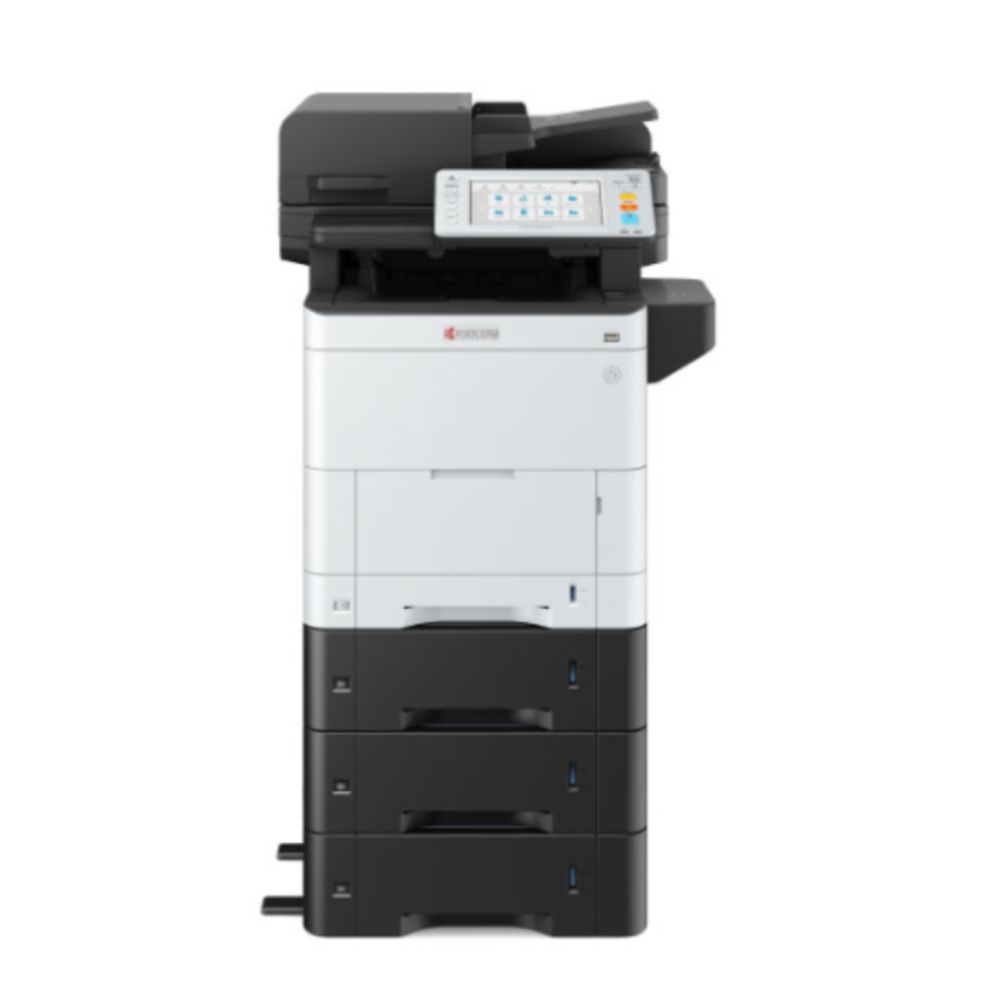
Whilst colour printing has its place, the majority of professional office documents — contracts, reports, internal communications require only black and white output. Monochrome laser printers deliver faster speeds and lower running costs, making them the pragmatic default for most departments.
Understanding what’s under the bonnet is only part of the equation. Once you’ve identified the right technology, the next critical decision is how you acquire it — and that’s where the rent-versus-buy debate becomes particularly relevant for Singapore businesses.
Strategic Procurement: Should Your Singapore Office Rent or Buy?
Once you’ve identified the right hardware and as covered earlier, laser technology is almost always the answer for demanding workflows the next critical decision is how you acquire it. For Singapore SMBs, this procurement choice can be just as consequential as the hardware specification itself.
The Case for Outright Purchase (capital expenditure (CAPEX))
Buying a printer outright offers clear advantages: full ownership from day one, no ongoing contractual obligations, and lower total spend over a long lifespan typically five to seven years for a quality device. For businesses with stable, predictable print volumes and sufficient capital reserves, owning the best business printer for high volume use outright makes straightforward financial sense.
However, the upfront cost of a robust A3 laser or production-grade multifunction device can run anywhere from £1,170 to well over £5,850. Factor in maintenance contracts, toner procurement, and the inevitable capital hit of replacing obsolete hardware, and the capital expenditure (CAPEX) model demands careful planning.
The Case for Rental and Leasing (operational expenditure (OPEX))
Printer rental and leasing convert that heavy upfront cost into a predictable monthly expense typically bundled with a cost-per-page agreement covering consumables and servicing. For cash-flow-conscious SMBs, this is genuinely compelling. Capital stays available for core business investment rather than depreciating office equipment.
Local leasing providers in Singapore commonly offer terms of 24 to 60 months, often with mid-contract upgrade clauses. This flexibility means your office isn’t locked into hardware that becomes underpowered as your print volumes grow.
Calculating Your Break-Even Point
A practical rule of thumb: divide the device’s purchase price by the monthly savings versus leasing. For example, a £3,510 printer with a £105/month lease equivalent suggests a break-even at roughly 33 months before factoring in maintenance costs, which consistently favour the leasing model.
The decision ultimately hinges on volume trajectory and capital priorities. And once you’ve resolved how to acquire the hardware, a further layer of strategic efficiency becomes available — one that typically delivers cost reductions of 30% or more. That’s where Managed Print Services enter the picture.
Managed Print Services (MPS): The Secret to 30% Cost Reduction
Having navigated the hardware and procurement decisions, many Singapore businesses discover their biggest inefficiency isn’t the printer itself — it’s everything surrounding it. That’s precisely where Managed Print Services (MPS) transforms the equation.
Managed print services Singapore providers offer a comprehensive operational model that extends well beyond simply leasing equipment. A typical MPS contract covers three critical pillars:
- Automated toner replenishment — supplies are monitored remotely and dispatched before you run out, eliminating the scramble for last-minute cartridges
- Proactive maintenance — technicians service devices on a scheduled basis rather than responding reactively to breakdowns
- Fleet optimisation — usage data is analysed to right-size your printer fleet, eliminating redundant devices and consolidating print jobs efficiently
In practice, organisations that consolidate under an MPS model frequently report cost reductions in the region of 30%, driven primarily by eliminating wasteful ad-hoc purchasing and reducing downtime.
Freeing Your IT Team From Printer Management
Printer management is a significant hidden drain on IT resources. When IT staff are troubleshooting paper jams, chasing toner supplies, or managing driver conflicts, they’re not solving higher-value problems. MPS transfers that operational burden to specialists, returning meaningful productive hours to your internal team.
Security: An Underestimated Benefit
High-volume environments generate substantial volumes of sensitive documents. MPS providers typically include print security protocols user authentication, encrypted data transmission, and audit trails as standard components of their service. For businesses handling confidential client data or financial records, this oversight is invaluable.
With the operational and financial framework now clear, the next logical question is which specific hardware models best support these demands in Singapore’s market.
Top High-Volume Business Printer Models in Singapore
With procurement strategy and cost management addressed, the natural next question is: which specific models actually deliver in Singapore’s demanding office environments? Here’s a focused look at the leading heavy-duty office printers Singapore businesses are deploying right now.
Fujifilm ApeosPort 4730SD: The Reliability Benchmark
The ApeosPort 4730SD has earned a strong reputation among larger enterprises and print-intensive operations. Designed for continuous-duty cycles, it handles tens of thousands of pages monthly without the reliability dips that plague lesser machines. Its security features including hard drive encryption and user authentication make it particularly well-suited to regulated industries such as finance and legal. For organisations where downtime is simply not an option, the ApeosPort consistently sets the standard.
Brother MFC-L6915DW: The SMB Workhorse
Growing SMBs looking for genuine value without sacrificing performance will find the Brother MFC-L6915DW a compelling choice. It offers competitive print speeds, a generous paper capacity, and low cost-per-page figures that align well with the budget discipline covered in the MPS section earlier. In practice, it’s one of the most frequently recommended entry points for businesses scaling from light to medium-high volume.
HP LaserJet Enterprise Series: Built for Secure Environments
Where data security is paramount common in Singapore’s heavily regulated financial and government sectors the HP LaserJet Enterprise range stands out. HP’s own technical documentation highlights the precision engineering that underpins consistent, crisp output at volume. Built-in threat detection and fleet management integration make it a natural fit for enterprise IT teams with strict compliance requirements.
Epson EcoTank Pro: The Eco-Conscious Alternative
For organisations with genuine sustainability commitments, the Epson EcoTank Pro offers a credible inkjet alternative. Its high-capacity ink tank system dramatically reduces cartridge waste, and research comparing laser and inkjet technologies confirms that modern inkjet has narrowed the gap in quality significantly. However, it’s worth noting that heavy-duty laser options still outpace inkjet for sheer throughput in most scenarios.
Choosing the right model is only part of the equation once you’ve invested in the correct hardware, how quickly you can get it back online when something goes wrong becomes equally critical.
The Local Advantage: Why 4-Hour Support Response is Non-Negotiable
In Singapore’s fast-paced commercial environment, a printer outage isn’t merely an inconvenience it’s a direct revenue event. When a high-volume device goes down during a critical deadline, every hour of downtime compounds the cost in missed contracts, delayed deliverables, and frustrated staff.
Local on-site support changes the equation entirely. A Singapore-based vendor can typically dispatch a technician within two to four hours. By contrast, relying on international helplines or remote coordination often means waiting 24 to 48 hours for a resolution — an eternity in a business culture that prizes speed and reliability above almost everything else.
This is precisely why printer rental Singapore arrangements are gaining traction. Rental agreements frequently bundle guaranteed SLA response times directly into the contract, removing ambiguity about who’s responsible when things go wrong.
When evaluating an SLA with any local vendor, look for:
- Clearly defined response times (target: four hours or fewer)
- On-site parts availability, not just remote diagnostics
- Escalation procedures and named account contacts
- Penalties or service credits if response windows are breached
A strong SLA is ultimately your most valuable procurement decision the hardware is secondary to the support structure surrounding it.
Key Takeaways
- Speed: Laser printers typically produce 30–60 pages per minute, compared to 10–20 for comparable inkjet models
- Cost-per-page: Toner cartridges yield substantially more prints per refill, reducing the per-page cost considerably at volume
- Durability: Fewer moving parts and no ink-clogging issues mean laser units require less maintenance intervention
- Automated toner replenishment — supplies are monitored remotely and dispatched before you run out, eliminating the scramble for last-minute cartridges
- Proactive maintenance — technicians service devices on a scheduled basis rather than responding reactively to breakdowns