Skip to contentSkip to sidebarSkip to footer


For most Singapore SMEs buying Hikvision in 2026, we recommend a 4MP AcuSense turret camera such as the DS-2CD2346G2-I or a similar ColorVu model, paired with a Hikvision 8-channel PoE NVR and surveillance-rated hard drives. That pairing covers a typical office, clinic or retail unit of up to about 2,000 sq ft, with clear faces at the door, decent night images and person/vehicle filtering that cuts down false alerts. The trade-off is procurement scrutiny: some organisations, especially those that supply government agencies or multinational clients, have policies that rule out Hikvision. If that applies to you, Hanwha Vision is the alternative we would shortlist instead.
This guide covers which Hikvision Singapore buyers should choose, when Hanwha Vision is the better fit, which specs matter and which don’t, and what to confirm before you place an order.
Which Hikvision camera should a Singapore SME buy?
Hikvision’s catalogue runs to thousands of SKUs, but most are irrelevant to a 10 to 50-person business. For SMEs the useful options sit in the EasyIP and Pro series network cameras, which use Power over Ethernet (PoE): one cable carries both power and data. That matters in Singapore offices, where the ceiling space above a shophouse or business-park unit is cramped, and you don’t want to pay an electrician to add a power point beside every camera.
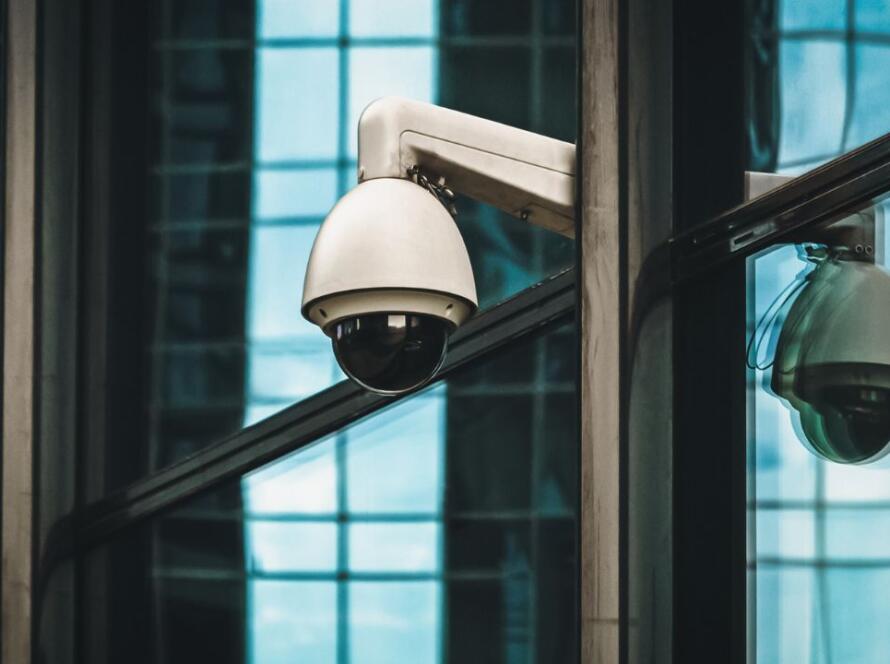
Choose the form factor by location. Turret cameras are the general-purpose choice, suited to interior corridors, reception and storerooms; because they have no dome bubble, IR light doesn’t reflect back into the lens. Bullet cameras belong outdoors: loading bays, car park entrances, back lanes. Dome cameras are harder to tamper with and look less obtrusive, so they work well in retail and clinic waiting areas where you don’t want patients or customers to feel watched.
For a broader view of camera types beyond one brand, see our IP camera Singapore buying guide.
Hikvision vs Hanwha Vision: which suits your business?
Hanwha Vision is the former Samsung Techwin, now based in Korea, and the competitor Singapore buyers most often compare against Hikvision. The table below gives the practical differences.
| Factor | Hikvision | Hanwha Vision |
|---|---|---|
| Typical price position | Lower per camera | Roughly 20-50% higher for comparable specs |
| Analytics | AcuSense person/vehicle filtering, widely available | Wisenet AI on X and P series, strong |
| Procurement restrictions | Restricted for US federal use under the NDAA; some MNC policies exclude it | NDAA-compliant models available |
| Best fit | Cost-sensitive offices, retail, F&B | Firms with compliance-driven procurement, regional HQs |
Our position: buy Hikvision if price-to-performance is your main concern and no client contract or internal policy restricts the brand. Choose Hanwha Vision if you supply regulated sectors, your parent company runs a vendor blacklist, or your auditors ask about NDAA status. Paying extra for Hanwha doesn’t get you a sharper picture — it gets you a brand that won’t cause problems in a procurement review.
What does Hikvision CCTV cost in Singapore?
The figures below are general market ranges, not Groovit quotes. In Singapore, a 4MP Hikvision turret or bullet camera typically retails for around S$90 to S$200 before GST. ColorVu and AcuSense variants sit at the upper end. 8MP (4K) models generally cost S$200 to S$400. An 8-channel PoE NVR usually costs S$250 to S$500 without hard drives. Budget S$150 to S$350 for each surveillance-grade drive such as WD Purple or Seagate SkyHawk, depending on capacity.
A typical 6 to 8-camera SME setup, including cabling, NVR, storage and installation, often lands somewhere between S$2,500 and S$6,000 before 9% GST. Cable runs, ceiling access and after-hours work are what push the price up. Hanwha Vision equivalents usually raise the hardware share of that figure noticeably.
For business accounts, we invoice on 30-day terms, which helps when the security budget lands in a different quarter from the install. If you would rather spread the cost, read our guide on IT equipment leasing for SMEs in Singapore.
Which specs actually matter?
- Resolution matched to distance. 4MP is enough for most rooms. Choose 8MP only where a single camera has to cover a wide area, such as a warehouse floor or a large retail space.
- Low-light performance. ColorVu models keep colour images at night with a warm supplementary light. Standard IR models switch to black and white. Where you need to identify clothing colour, as at retail and clinic entrances, ColorVu is worth paying for.
- AcuSense analytics. These filter out alerts caused by rain, insects and shadows. Without them, motion alerts become noise that everyone ignores within a week.
- H.265+ compression. This roughly halves storage needs compared with H.264, so you need fewer drives for the same retention period.
- IP67 rating for outdoor cameras. Singapore’s rain and humidity are hard on cheaper housings.
Which specs can you ignore?
Pass on 12MP cameras for ordinary rooms — they multiply storage cost for detail you will never use. Built-in microphones also deserve caution: recording audio raises significantly more privacy issues under the PDPA, and most SMEs are better off leaving audio disabled. Skip facial recognition and people-counting unless you have a clear operational use for them. They add cost and add personal data obligations.
On compliance, read the PDPC’s advisory guidelines on CCTV and personal data. Put up notices that CCTV is in operation, keep footage only as long as you need it, and restrict who can view it.
How should a Hikvision system be installed and secured?
Hikvision products have had well-publicised firmware vulnerabilities in the past. With current models, the risk usually comes from how the system is deployed rather than the hardware itself. Change the default passwords, keep firmware up to date, and don’t port-forward the NVR directly to the internet. Use Hik-Connect with proper credentials or a VPN instead, and put cameras on their own VLAN behind a business firewall. Our guide to buying a FortiGate firewall in Singapore covers that layer.
Check the manufacturer’s notices as part of your maintenance routine. Hikvision publishes them on its security advisory page. For what a proper commercial installation should include, see our CCTV installation Singapore business guide. If you also plan to fit door access, our article on Hikvision access control in Singapore explains how the two systems can share one platform.
What should you check before ordering Hikvision in Singapore?
- Procurement policy: Confirm with your HQ or key clients that Hikvision is permitted before anything is installed.
- Retention period: Decide on 14, 30 or 90 days, then size the hard drives to match.
- PoE budget: Check that the NVR or switch can supply enough total wattage, especially for ColorVu or IR-heavy cameras.
- Building rules: Get management corporation or landlord approval for any outdoor mounting or cabling through common areas.
- Warranty source: Ask whether the units are local-set stock with a Singapore warranty or parallel imports.
- Remote access: Agree who holds the admin credentials and who can view footage from their phone.
The brand decision comes down to procurement policy, and the system’s quality comes down to installation. Settle both before you compare camera specs.
Get Hikvision supply and installation support from Groovit
Need CCTV for your office, clinic or retail unit? Contact Groovit Pte Ltd for supply and installation support. Ready-stock items ship within 1-3 business days, and business accounts get 30-day invoice terms. Browse the Groovit shop, email [email protected] or WhatsApp +65 8088 5805 with your floor plan and camera count, and we’ll recommend either a Hikvision or a Hanwha Vision setup.
Frequently Asked Questions
Is Hikvision allowed for businesses in Singapore?
Yes. Singapore law does not ban Hikvision for private businesses. However, some multinational and government-linked organisations have procurement policies that exclude it, so check with your HQ or key clients first.
How much does a Hikvision CCTV system cost in Singapore?
As a general market range, a 6 to 8-camera SME system with NVR, storage and installation often costs about S$2,500 to S$6,000 before 9% GST. The final price depends heavily on cabling and site conditions.
Should I choose Hikvision or Hanwha Vision?
Choose Hikvision for the best price-to-performance where no procurement restrictions apply. Choose Hanwha Vision if you need NDAA-compliant equipment or your clients or parent company restrict Chinese-made surveillance brands.
Do I need to put up CCTV notices under the PDPA?
Yes. The PDPC advises organisations to put up notices informing people that CCTV is in operation. You should also limit how long footage is retained and control who can access it.
How fast can Groovit deliver Hikvision equipment?
Groovit ships ready-stock items within 1-3 business days. Business accounts can be invoiced on 30-day terms.